
Nature · 10 October 2026 · 4 min čitanja · 13 čita
The Apuseni Mountains and the Scărișoara Ice Cave
An underground glacier thousands of years old, karst gorges and remote highland villages: discover the Apuseni Mountains and the Scărișoara Ice Cave.
Picture a vast hole opening in the middle of a forest, its walls dropping steeply into the earth. You descend a series of metal stairs, the air growing colder with every step, until you stand in front of a frozen lake hidden deep underground. Even in the height of summer, it is cold enough to see your breath. This is the Scărișoara Ice Cave, one of the natural wonders of Romania, and the crown jewel of the Apuseni Mountains.
The Apuseni: Romania's Karst Kingdom
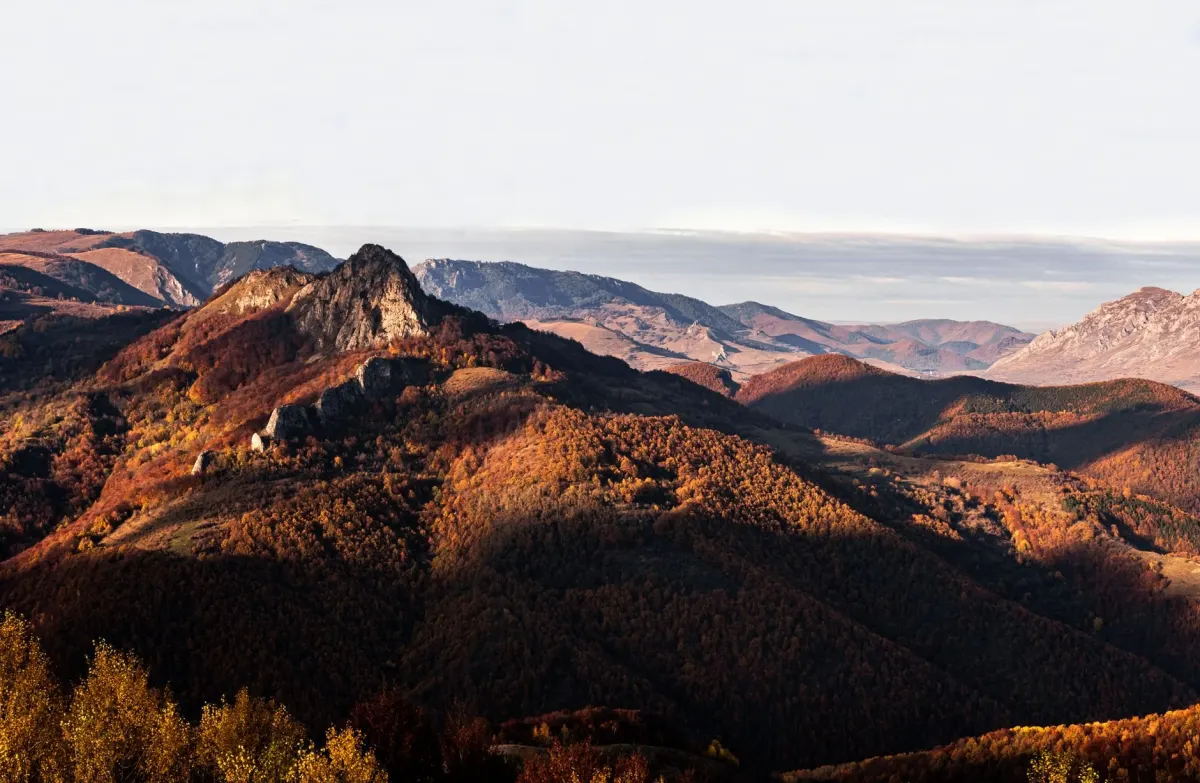
The Apuseni Mountains rise in western Romania, between Transylvania and the plains of Crișana. They are lower and gentler than the Southern Carpathians, but what they lack in height they make up for in mystery. Water has carved this limestone landscape for millions of years, creating hundreds of caves, sinkholes, underground rivers, gorges and springs that vanish and reappear.
Much of this landscape is protected within the Apuseni Natural Park, a world of meadows, spruce forests and scattered homesteads where the local Moți communities have lived for centuries, known for their woodworking, their resilience and their warm hospitality.
Scărișoara: A Glacier Beneath the Forest
The Scărișoara Ice Cave, near the village of Gârda de Sus, holds one of the largest underground ice blocks in Europe. Its entrance is a dramatic shaft roughly 50 metres deep, through which cold winter air sinks and becomes trapped, allowing the ice to survive all year round.
Scientists have studied the ice for decades, and research has shown that its deepest layers are several thousand years old, making the cave a precious natural archive of past climates. Like many glaciers around the world, its ice is sensitive to changing conditions, which makes a visit all the more meaningful.
What to expect
- A walk through the forest to the cave entrance, followed by a descent on stairs into the shaft.
- A visit to the "Great Hall", where a viewing platform overlooks the ice and, depending on the season, ice stalagmites.
- Temperatures close to freezing inside, even in summer, so warm clothing and good shoes are essential.
Visiting arrangements, seasons and access conditions are set locally and can change, so it is worth checking before you go.
More Wonders of the Apuseni
The Bears' Cave at Chiscău
Discovered in 1975 during quarrying work, Peștera Urșilor (the Bears' Cave) is famous for its beautiful stalactites and stalagmites and for the bones of cave bears, an extinct species that lived here tens of thousands of years ago. Guided visits follow a well-arranged path through its galleries.
Cetățile Ponorului
Deep in the park, the Cetățile Ponorului ("Citadels of Ponor") are a series of enormous sinkholes and a cave with one of the most impressive entrances in Romania, a towering arch of rock. Reaching them requires a proper hike and suitable conditions, but the sense of scale is extraordinary.
Turda Gorge and Turda Salt Mine
On the eastern edge of the region, near Cluj-Napoca, Turda Gorge offers a spectacular walk between limestone walls, while the nearby Turda Salt Mine is a surreal underground world with chambers carved from salt and a modern leisure area at the bottom of a vast hall.
When to Visit
Late spring to early autumn is the most comfortable season for exploring the Apuseni, with green meadows, long days and open trails. Autumn colours in the beech forests can be spectacular. Winter brings snow and a quiet beauty, but some roads, trails and attractions may be harder to reach, so planning and flexibility are key. In the mountains, weather can change quickly at any time of year.
Insider Tips
- Layer up. You may go from a warm summer meadow to near-freezing cave air within minutes.
- Wear proper shoes. Cave floors and stairs can be wet or icy, and forest trails are often muddy.
- Base yourself well. Cluj-Napoca is the natural gateway, but staying in a guesthouse in the mountains lets you experience the rhythm of the Moți villages.
- Taste the region. Look for simple mountain dishes, fresh cheese, forest berries and home-made preserves.
Travel to the Apuseni With a Private Chauffeur
The Apuseni lie roughly 500 kilometres from Bucharest, and the best places are linked by winding mountain roads that are far more enjoyable with someone experienced at the wheel. Many travellers fly to Cluj-Napoca and continue from there, or combine the region with a wider Transylvanian journey. We do not run a fixed Apuseni tour, but a private chauffeur for a multi-day trip can be arranged on request through our concierge, so your only concern is how many caves to see.
Isplanirajte s nama
Želite da to organiziramo za Vas?
Javite nam svoje datume — šaljemo Vam privatni plan s fiksnim cijenama.