Experiences · 10 September 2026 · 4 דקות קריאה · 1 קריאות
Bucharest to Bulgaria: Ruse, Veliko Tarnovo and the Danube
Cross the Danube on the Friendship Bridge, stroll Ruse's Belle Époque boulevards and climb to Veliko Tarnovo's fortress: a day trip to Bulgaria from Bucharest.
One of Bucharest's best-kept secrets is how close it is to another country. Barely an hour's drive south, the Danube marks the border with Bulgaria, and on the other side lie two of the most rewarding cities in the Balkans: graceful Ruse on the riverbank and the medieval former capital, Veliko Tarnovo, draped over the hills of the Yantra gorge. It makes for an unforgettable day, or an even better overnight.
Crossing the Danube: the Friendship Bridge
The journey south from Bucharest crosses the flat Wallachian plain to Giurgiu, on the Romanian bank of the Danube. Here you cross the Giurgiu–Ruse Friendship Bridge, a steel bridge opened in the 1950s that carries both road and rail traffic and was for decades the only bridge linking the two countries along their shared stretch of the river.
The view from the bridge, with the wide, slow Danube stretching in both directions, is a memorable moment in itself. A toll applies for vehicles crossing the bridge, and Bulgarian roads require an electronic vignette, details your chauffeur will have taken care of.
Borders, documents and currency
Both Romania and Bulgaria became full members of the Schengen area in 2025, which removed routine checks at the land border between them. That said, rules and spot checks can change, so always check current entry requirements for your nationality and carry your passport or national ID card.
- Currency: Bulgaria adopted the euro in January 2026, replacing the lev; Romania still uses the leu. Cards are widely accepted in both cities, but a little cash is useful.
- Time zone: both countries are on Eastern European Time, so no need to change your watch.
- Alphabet: Bulgaria uses Cyrillic. Many signs in tourist areas are also in Latin script.
Ruse: the "Little Vienna" of the Danube
Just across the bridge, Ruse is Bulgaria's largest Danube port and one of its most elegant cities. In the late nineteenth century it was a prosperous, cosmopolitan trading town, and its centre still shows it: Neo-Baroque and Neo-Classical façades, ornate theatres and wide boulevards that earned it the nickname Little Vienna.
What to see in Ruse
- Liberty Square, the city's grand central square, dominated by the Monument of Liberty.
- The pedestrian streets around the centre, ideal for a coffee and a slow walk past restored mansions.
- The Danube promenade, where you can look back across the water towards Romania.
Nearby: rock churches and canyons
South of Ruse, the Rusenski Lom Nature Park hides limestone gorges and the Rock-hewn Churches of Ivanovo, a UNESCO World Heritage Site of medieval chapels carved into the cliffs and decorated with remarkable frescoes. The Basarbovo Rock Monastery, still active, is another atmospheric stop along the way.
Veliko Tarnovo: the city of the tsars
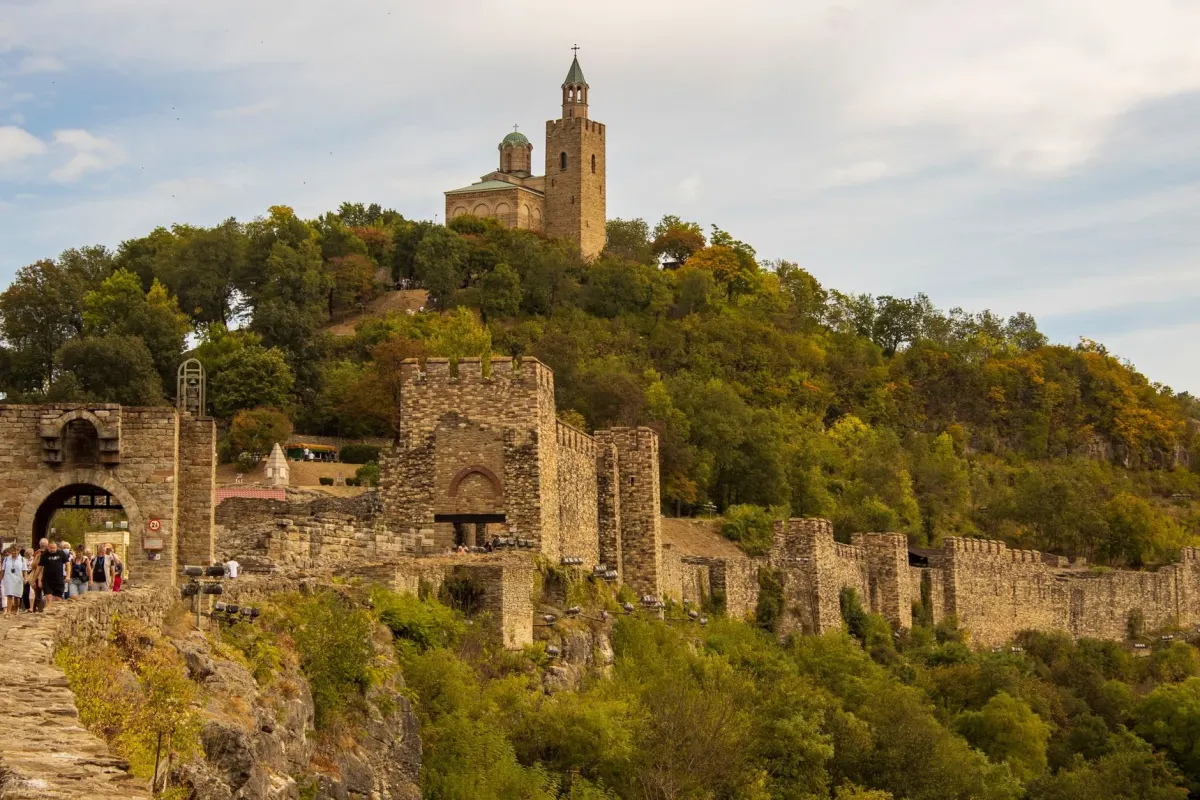
About two hours further south, Veliko Tarnovo appears like a stage set: houses stacked up the steep banks of the winding Yantra River, red roofs, wooden balconies and, on its own rocky hill, the great fortress of Tsarevets.
From the late twelfth to the late fourteenth century, Tarnovo was the capital of the Second Bulgarian Empire, and the walls, gates and ruined palace of Tsarevets still evoke that golden age. At the summit, the Patriarchal Church of the Holy Ascension, rebuilt in the twentieth century, is decorated with striking modern frescoes.
What not to miss
- Tsarevets Fortress: walk the ramparts for panoramic views of the river bends.
- Samovodska Charshia: a restored nineteenth-century craftsmen's street of workshops, ateliers and small shops.
- Gurko Street: one of the oldest streets in town, with houses clinging to the cliff above the river.
- The Asen Dynasty Monument: a dramatic monument on a river bend, best seen from the old town.
- Arbanasi: a historic village on the plateau above the city, known for its fortress-like merchant houses and beautifully painted churches.
Planning the trip
Day trip or overnight?
Bucharest to Veliko Tarnovo is roughly 200 km each way, so a day trip is entirely possible with an early start: Ruse in the morning, Veliko Tarnovo in the afternoon, back in Bucharest for a late dinner. An overnight stay lets you see Tsarevets lit up at night and adds Arbanasi or the Ivanovo churches at a relaxed pace.
When to go
Spring and autumn are ideal: comfortable for walking the fortress and the steep old streets. Summer is hot but lively, and winter brings quiet, misty views of the gorge.
What to wear
Comfortable shoes are essential: the fortress paths and cobbled streets are steep and uneven.
Cross the Danube with Kartas
Two countries, two capitals of history and one effortless day, with documents, tolls and timing handled for you. Discover our private Veliko Tarnovo tour, or browse our other experiences to build a journey that starts in Bucharest and ends wherever you like.
תכננו איתנו
רוצים שנארגן לכם את זה?
ספרו לנו את התאריכים — ונשלח תוכנית פרטית במחירים קבועים.