Transylvania · 5 November 2026 · 4 nóiméad le léamh · 1 léitheanna
Râșnov and Rupea Fortresses: Transylvania's Hilltop Strongholds
Two hilltop citadels, two moods: Râșnov guards the pass near Bran, Rupea rises from a volcanic hill. A guide to Transylvania's most photogenic fortresses.
Transylvania is a land of walls. Its Saxon towns ringed themselves with towers, its villages fortified their churches, and on the hilltops above the main roads, communities built citadels where whole populations could take refuge when raiders came through the mountain passes. Two of the most rewarding to visit today are Râșnov and Rupea. They are often overlooked by travellers rushing between better-known names, and that is precisely their charm.
Râșnov: the peasant citadel above the pass
Drive south-west from Brașov towards Bran and, a few kilometres before the famous castle, a long line of walls and towers appears on a wooded hill above the town of Râșnov. On the slope below, large white letters spell out the town's name, Hollywood style.
A fortress built by and for villagers
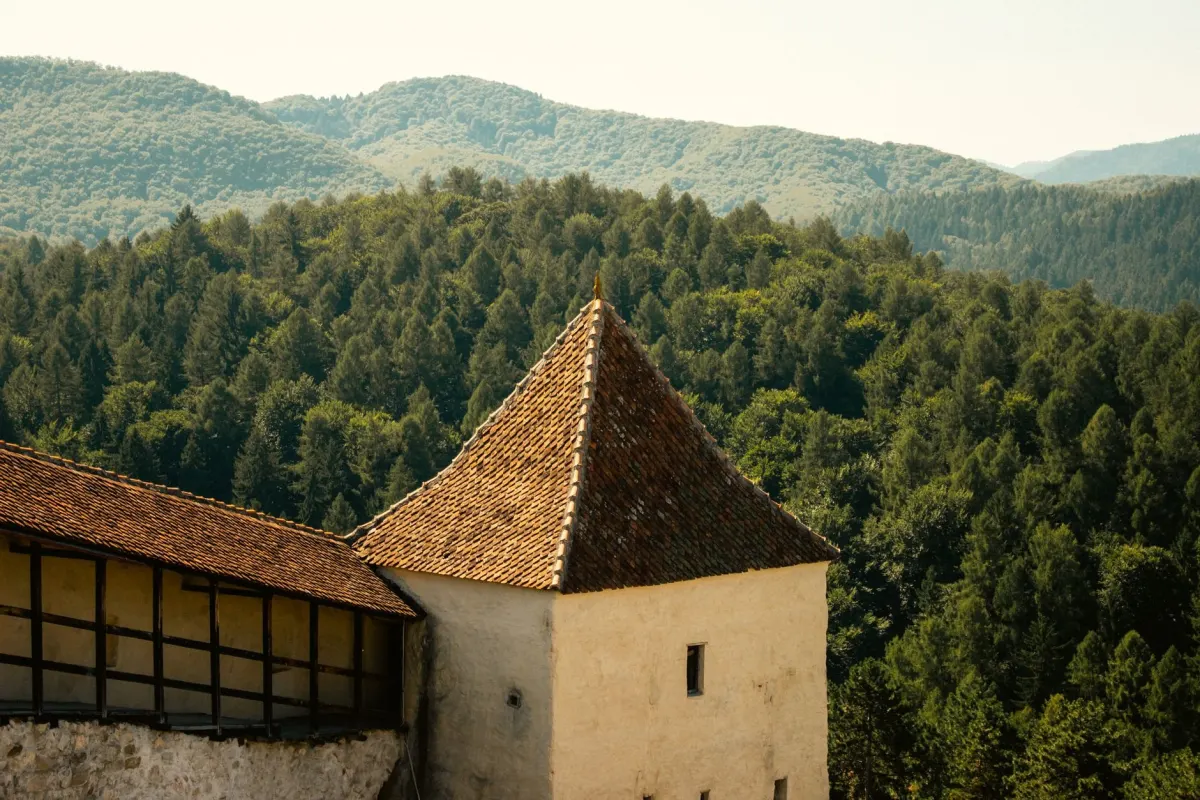
Râșnov Fortress was first mentioned in documents in the fourteenth century, and its origins are often linked to the period of the Teutonic Knights in the Bârsa region. Unlike a nobleman's castle, it was a peasant fortress, built and maintained by the local community to protect itself from attacks coming through the nearby passes. Inside the walls there were houses, storerooms, a chapel and even a school, so that families could live here for long periods during a siege.
According to tradition, the fortress was taken only once, in the early seventeenth century, when besiegers discovered the hidden path that brought water to the defenders. Treat the details as part of local lore; they make the climb up the hill all the more evocative.
The well of the prisoners
Like Corvin Castle, Râșnov has a well with a famous story. Local legend says it was dug through solid rock by Turkish prisoners who were promised freedom on reaching water, a task said to have taken many years. Whatever the truth, standing at its edge and looking down into the shaft is a sobering moment.
The view
The real reward at Râșnov is the panorama. From the walls you look across the Bârsa plain, the town below, and the forested ridges of the Bucegi and Piatra Craiului mountains. On a clear autumn morning it is one of the finest viewpoints in the Brașov area.
Rupea: the citadel on the volcanic hill
On the road between Brașov and Sighișoara, about an hour north of Brașov, Rupea Fortress rises in tiers from a hill of dark basalt, its whitewashed walls and red roofs stepping up the slope like the setting of a historical film.
Ancient roots
The hill has been inhabited since prehistoric times, and some historians associate the site with the Dacian settlement known as Rumidava, though this remains debated. The medieval fortress was documented in the fourteenth century and grew over the following centuries into a complex of three precincts, upper, middle and lower, each with its own walls and towers.
A careful restoration
For a long time Rupea was a picturesque ruin. A major restoration in the 2010s brought it back to life, rebuilding walls, towers and walkways. The result is one of the most photogenic fortresses in Romania, especially at sunrise or sunset, when the white walls glow against the sky.
Basalt country
The volcanic character of the area is part of its appeal. Not far away, near the village of Racoș, are spectacular basalt columns and an old volcanic crater, a small geological wonder that pairs well with a visit to the fortress.
Râșnov or Rupea?
- Choose Râșnov if you are visiting Bran or Brașov and want a dramatic viewpoint and a sense of everyday life in a medieval refuge, close to the main road.
- Choose Rupea if you are travelling between Brașov and Sighișoara and love wide, quiet landscapes and beautifully restored walls.
- Choose both if you are spending a few days in the region. They show two very different faces of Transylvania's defensive past.
Practical tips
- Both fortresses involve walking uphill on uneven paths and stone steps. Comfortable shoes are essential.
- At Râșnov, there has traditionally been a small shuttle or road access up the hill as an alternative to walking; check what is available on the day.
- Opening hours vary with the season and with restoration work. Check before you go, especially in winter.
- Sunrise and late afternoon give the best light and the fewest visitors.
Visit the fortresses privately with Kartas
Râșnov sits just a few kilometres from Bran, which features on our Transylvania castles tour. Since the tour is entirely private, you can ask our concierge whether a stop at Râșnov can be added to your day. Rupea, on the road to Sighișoara, fits beautifully into a longer journey with a private chauffeur arranged on request. No group, no rush, just the walls, the view and the time to enjoy them.
Pleanáil linn é
Ar mhaith leat é seo a shocrú duit?
Inis dúinn do dhátaí — seolaimid plean príobháideach le praghsanna seasta.