Transylvania · 14 November 2026 · 4 min de lecture · 2 lectures
Sighișoara: A Local's Guide to Romania's Living Medieval Citadel
Clock towers, covered stairs and pastel houses where people still live: discover Sighișoara, the UNESCO citadel that feels like a medieval town that never left.
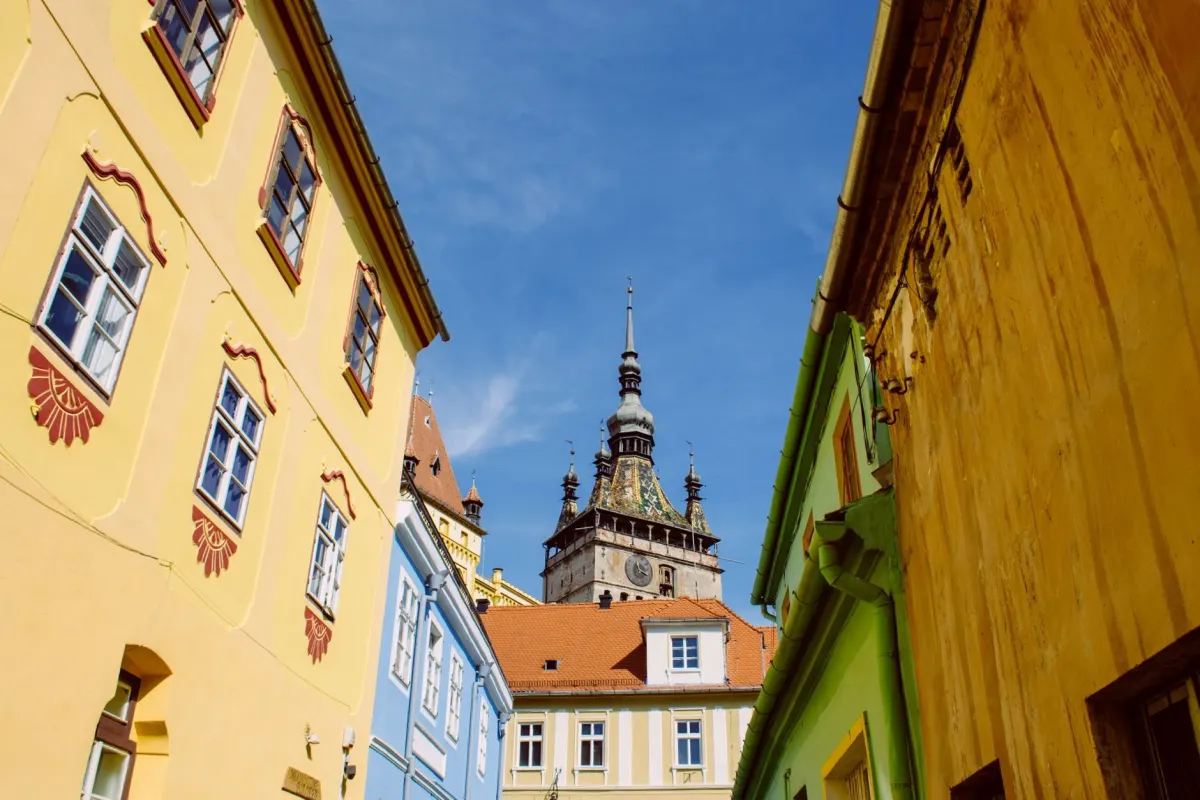
Most medieval towns in Europe are beautifully preserved museums. Sighișoara is something rarer: a medieval citadel where people still live. Children walk to school through cobbled lanes laid out centuries ago, washing hangs from windows in houses painted ochre, mint and raspberry, and the bells of the Clock Tower still mark the hours over the Târnava Mare valley.
The historic centre has been a UNESCO World Heritage Site since 1999, recognised as an outstanding example of a small fortified town built by the Transylvanian Saxons, the German-speaking craftsmen and merchants who settled here in the Middle Ages. It is compact enough to explore on foot in a morning, yet layered enough to reward a slow afternoon and a night within its walls.
The Clock Tower: the citadel's crown
The Clock Tower (Turnul cu Ceas) guarded the main gate of the citadel and served as the seat of the town council. Its colourful tiled roof is the symbol of Sighișoara, and its clock carries carved figurines that rotate with the days of the week, a playful bit of old engineering that delights children and adults alike.
Inside, the tower houses a history museum, and the climb ends on a wooden gallery with a sweeping view over rooftops, church spires and the green hills beyond. Go early, when the light is soft and the lanes below are still quiet.
Walking the upper town
The Scholars' Stairs
One of the most atmospheric corners of the citadel is the covered staircase, built in the seventeenth century so that pupils could reach their school on the hill sheltered from snow and rain. Climbing its wooden tunnel feels like stepping into an old engraving.
The Church on the Hill
At the top stands the Gothic Church on the Hill (Biserica din Deal), with traces of medieval wall paintings and a crypt. Behind it lies the old Saxon cemetery, terraced into the slope under tall trees: one of the most peaceful and quietly moving places in Transylvania.
The guild towers
The citadel was defended not by a standing army but by its craft guilds, each responsible for one tower. Several survive, among them the Shoemakers', Tailors', Tinsmiths' and Ropemakers' towers. Following the walls from one to the next is a lovely way to understand how this town organised itself.
Dracula, history and legend
Sighișoara is traditionally considered the birthplace of Vlad III, better known as Vlad the Impaler, the fifteenth-century prince of Wallachia whose family name, Dracula, later inspired Bram Stoker. A house near the Clock Tower is identified as the home where he was born, around 1431, and is marked with a plaque. The real Vlad has little to do with vampires, but the connection gives the town a pleasant frisson, and you will find his name on more than a few souvenirs.
When to visit
- Spring and early autumn offer mild weather, fewer crowds and soft light for photography.
- Summer is lively, and the town usually hosts a medieval festival with costumes, music and crafts. Dates vary from year to year, so check before you plan around it.
- Winter is quiet and atmospheric, especially after snow, when the citadel looks like a Christmas card.
- Museum and tower opening hours change with the season; check them before you go.
Spend the night inside the walls
Day visitors leave in the late afternoon. Stay overnight and you inherit the citadel: lanterns glowing on the cobbles, the tower floodlit against the sky, and a silence broken only by church bells. Several small guesthouses and boutique hotels occupy historic houses within or just below the walls; our concierge can help you choose one that suits your taste.
Combining Sighișoara with the rest of Transylvania
Sighișoara sits at the heart of Saxon Transylvania, which makes it a natural base. Within easy reach you will find the fortified churches of Biertan, Saschiz and Viscri, the restored fortress of Rupea and the rolling countryside of the Târnava valleys. Brașov lies about two hours to the south-east, Sibiu a similar distance to the south-west, so a loop through all three makes for an exceptional few days.
Practical tips
- The upper citadel is largely pedestrian; wear comfortable shoes for steep cobbles and stairs.
- Vehicle access inside the walls is restricted, so a driver who knows where to drop you off saves time and effort.
- Carry a little cash for small museums and cafés, although cards are widely accepted.
Discover Sighișoara privately with Kartas
Sighișoara is roughly four to five hours from Bucharest by road, which makes it ideal for a relaxed journey rather than a rushed day trip. Our concierge can arrange a private chauffeur on request, with no group, no fixed timetable and room for spontaneous detours through Saxon villages along the way. You set the pace; we make sure the road, the luggage and the timing take care of themselves.
Organisez-le avec nous
Souhaitez-vous que nous nous en occupions ?
Indiquez-nous vos dates — nous vous adressons un programme privé à prix fermes.