Experiences · 14 October 2026 · 4 min de lectura · 0 lecturas
Maramureș: Wooden Churches and the Merry Cemetery of Săpânța
Soaring wooden spires, carved gates and a cemetery that laughs at death: discover Maramureș, Romania's most authentic region, and the Merry Cemetery of Săpânța.
In the far north of Romania, close to the Ukrainian border, there is a region where haystacks still dot the meadows, where villagers wear traditional clothes to church on Sunday, and where every house seems to be guarded by a massive carved wooden gate. This is Maramureș, often described as one of the last places in Europe where traditional rural life continues in a recognisable form. It is not a postcard set; it is a living world, and it is one of the most memorable journeys you can make in Romania.
Wooden Churches That Touch the Sky
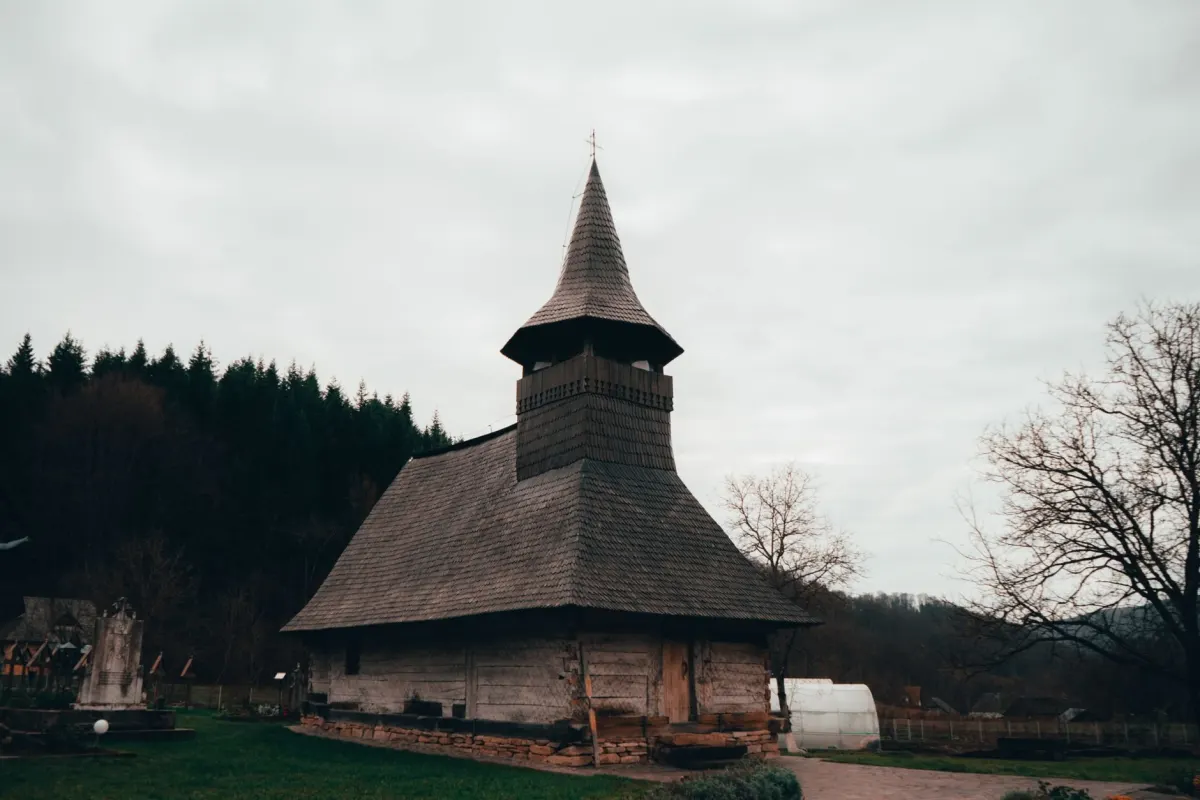
The symbol of Maramureș is its wooden churches: tall, dark, slender buildings with steep shingled roofs and needle-like spires that rise above the villages like exclamation marks. Built mostly in the 17th and 18th centuries, they were the work of local carpenters who joined timber with remarkable skill. Many of them are decorated inside with naive, colourful paintings of biblical scenes, sometimes painted directly onto the wooden walls.
Eight of these churches are listed by UNESCO as the Wooden Churches of Maramureș, a World Heritage Site since 1999. They include the churches of Bârsana, Budești, Desești, Ieud, Plopiș, Poienile Izei, Rogoz and Șurdești. Each is different, but all share the same harmony between architecture, landscape and faith.
Highlights to look for
- Șurdești and Plopiș, with their strikingly tall, slender towers, among the most elegant in the region.
- Ieud, a village whose "church on the hill" is one of the oldest and most evocative in Maramureș.
- Poienile Izei, famous for its vivid interior paintings, including dramatic scenes of the punishments awaiting sinners.
- Bârsana, home both to a UNESCO-listed church and to a newer monastery complex of wooden buildings set among manicured gardens, a modern tribute to the old craft.
The Merry Cemetery of Săpânța
And then there is a place unlike anywhere else on earth. In the village of Săpânța, the cemetery is filled with bright blue wooden crosses, each carved with a painted scene from the life of the person buried there and a short poem, often written in the first person. Some are tender, some are tragic, many are disarmingly funny, recalling a weakness for drink, a quarrelsome mother-in-law or a love of dancing.
The tradition was started by a local craftsman, Stan Ioan Pătraș, who began carving these crosses in the 1930s. After his death, his apprentice continued the work, and the cemetery has grown into a celebration of life as much as a place of mourning. It is known in Romanian as Cimitirul Vesel, the Merry Cemetery. Remember that it is still an active village cemetery: walk gently, speak softly and be respectful of families visiting their loved ones.
Village Life, Gates and Old Crafts
The great carved gates of Maramureș are works of art in their own right, decorated with symbols such as the twisted rope, the tree of life and the sun, believed to protect the household. Drive slowly through the valleys of the Iza and Mara rivers and you will see them everywhere, alongside wooden houses, small orchards and churches.
Other experiences worth considering:
- The Mocănița, a narrow-gauge forestry railway in the Vaser Valley, departing from Vișeu de Sus, where a steam train still climbs into the forested mountains in season.
- The Memorial of the Victims of Communism and of the Resistance in Sighetu Marmației, a former political prison turned museum, a sobering and essential stop for understanding Romania's 20th century.
- Local hospitality: home-made bread, cheese, smoked meats, sweet pastries and, of course, the strong local plum brandy, horincă, offered with great pride.
When to Visit
Maramureș is beautiful all year, but each season changes its character. Late spring and summer bring flower meadows and haymaking, autumn paints the hills in copper and gold, and winter, especially around Christmas and New Year, is when the old customs, carols and masked processions come alive. Weather in the mountains can change quickly, so a flexible plan is always wise.
How to Get There
Maramureș is far from Bucharest, roughly 600 kilometres by road, so most travellers plan at least three or four days. A common approach is to fly to Cluj-Napoca or Baia Mare and continue by car, or to combine Maramureș with Transylvania or Bucovina in a longer loop through northern Romania.
Explore Maramureș Privately
The beauty of Maramureș lies in its small roads and unhurried moments: stopping when you see a haystack in perfect light, or when a villager invites you to admire their gate. A dedicated driver makes those moments possible. We do not offer a fixed Maramureș tour, but a private chauffeur for a multi-day journey can be arranged on request through our concierge, with an itinerary shaped entirely around you.
Plánelo con nosotros
¿Desea que nos ocupemos de ello?
Indíquenos sus fechas y le enviaremos un plan privado con precios cerrados.