Experiences · 15 October 2026 · 4 мин. четене · 0 четения
The Painted Monasteries of Bucovina: Romania's UNESCO Treasures
Voroneț blue, Sucevița green and frescoes that have faced five centuries of weather: a journey through the UNESCO painted monasteries of Bucovina.
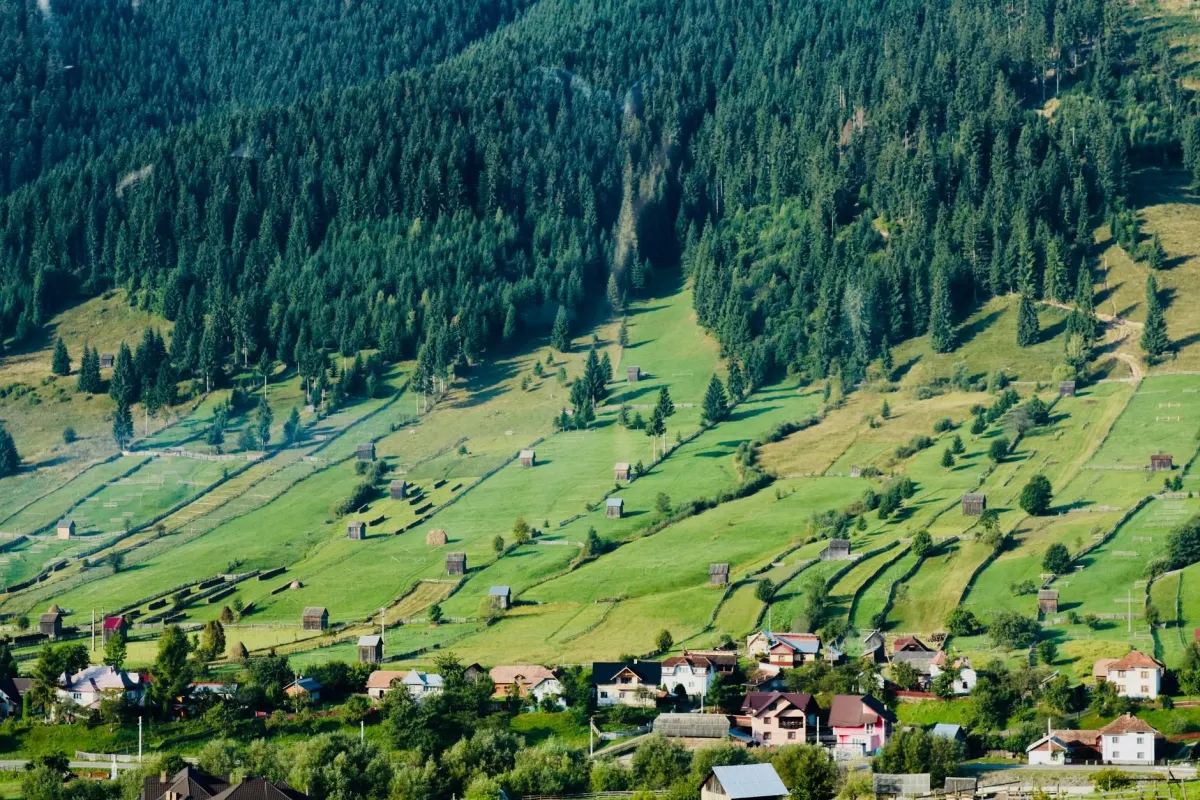
Imagine a church whose outer walls are covered from the ground to the eaves in paintings: saints, angels, prophets, philosophers, the siege of Constantinople, the Last Judgment, all in colours so intense they still glow after nearly five hundred years of snow, rain and summer sun. This is not a single masterpiece hidden in a museum. In the hills of Bucovina, in north-eastern Romania, there are several of them, scattered across green valleys and framed by forests.
The painted monasteries of Bucovina are among the most extraordinary monuments of Eastern Europe, and seeing them in person is one of the most moving cultural experiences Romania has to offer.
A Gospel Painted on the Walls
Most of these churches were built and decorated in the 15th and 16th centuries, during the reigns of Stephen the Great and his son Petru Rareș, princes of Moldavia. The exterior paintings, largely created in the 16th century, had a clear purpose: to tell biblical stories and lessons of faith to villagers who could not read, and to inspire them in a time of constant threat from powerful neighbours.
Eight of these churches are listed together by UNESCO as the Churches of Moldavia, a World Heritage Site first inscribed in 1993 and extended in 2010 to include the Sucevița Monastery. Each has its own dominant colour, its own atmosphere and its own story.
The Monasteries You Should Not Miss
Voroneț: the "Sistine Chapel of the East"
Founded by Stephen the Great in 1488, Voroneț is the most famous of all, renowned for its intense blue, known simply as "Voroneț blue". Its western wall holds a monumental Last Judgment, one of the most celebrated scenes in Romanian art, with rivers of fire, choirs of saints and souls being weighed. Stand before it in the late afternoon light and you will understand why it is so often compared to the Sistine Chapel.
Sucevița: the green monastery
Surrounded by high fortified walls and towers, Sucevița looks like a citadel of faith. Its frescoes are dominated by rich greens, and one wall features the famous Ladder of Virtues, where angels help the righteous climb towards heaven while devils try to pull sinners down. It is among the best-preserved of all the painted churches.
Moldovița: the golden one
Moldovița is known for its warm yellow tones and a vivid depiction of the Siege of Constantinople, painted with remarkable detail. Like Sucevița, it stands within a walled enclosure, which adds a sense of calm and seclusion.
Humor and Arbore
Humor, dominated by reddish-brown hues, is smaller and more intimate, with an open porch that lets you see the paintings up close. Arbore, a church built by a nobleman rather than a prince, is admired for its subtle greens and the remarkable detail of its western facade.
Living Traditions of Bucovina
The monasteries are not museums; many are active communities of nuns or monks, and the services, the chanting and the sound of the toacă, the wooden board struck to call the faithful to prayer, are part of the experience. Between visits, the region offers some delightful craft traditions:
- Black pottery from Marginea, polished to a soft sheen with techniques passed down through generations.
- Painted and decorated eggs, a famous Bucovina art, with intricate patterns created using wax and natural dyes, especially around Easter.
- Traditional food: hearty soups, sour cream, mountain cheese, mushrooms from the forests and pies sweetened with local fruit.
Practical Tips for Your Visit
- Dress respectfully. Covered shoulders and knees are expected; women may be asked to wear a skirt or a scarf, which are sometimes available at the entrance.
- Photography rules vary. Exterior photos are usually fine, but inside the churches photography is often restricted. Always ask.
- Take your time. Bucovina is about 450 kilometres from Bucharest, so it is best enjoyed as a trip of two to four days rather than a day excursion. Some travellers fly to Suceava or Iași and continue by car.
- Seasons. Late spring to early autumn is the most comfortable time to travel, while winter, with snow on the hills, can be magical if you are prepared for colder weather and shorter days.
Discover Bucovina With a Private Chauffeur
The painted monasteries are spread across rolling countryside, and the roads between them wind through villages and forested passes. Travelling with a dedicated driver means you can visit them in the right order for the light, linger where you feel moved and never worry about directions. We do not run a fixed Bucovina tour, but a private chauffeur for a multi-day journey can be arranged on request through our concierge, tailored entirely around your interests.
Планирайте го с нас
Искате да организираме това за Вас?
Съобщете ни датите си — ще Ви изпратим личен план с фиксирани цени.