
Transylvania · 27 September 2026 · قراءة 4 دقائق · 1 قراءة
Dracula vs. Vlad the Impaler: Separating Legend from History
Who was the real Vlad the Impaler, and how did a Wallachian prince become the world's most famous vampire? Separating history from Gothic legend.
Few names travel as far as Dracula. Mention Romania almost anywhere in the world and someone will reply with a mock bite and a Transylvanian accent. Yet behind the cape and fangs lies a real man, Vlad III of Wallachia, whose life was every bit as dramatic as fiction, but in very different ways. Here is how to tell the prince from the vampire.
Who was Vlad the Impaler?
Vlad III was born around 1431, most likely in the Transylvanian town of Sighișoara, where a house in the citadel is still pointed out as his birthplace. His father, Vlad II, was admitted to the Order of the Dragon, a chivalric order created to defend Christendom, and became known as Dracul, "the Dragon". His son was therefore Drăculea, "son of Dracul", the name that would later echo around the world.
His youth was shaped by the power struggles of the age. As a boy, Vlad and his younger brother Radu were held as hostages at the Ottoman court, a common guarantee of loyalty at the time. The experience gave him a close knowledge of his future enemies.
A prince of Wallachia
Vlad ruled Wallachia, the principality in what is now southern Romania, three times: briefly in 1448, then from 1456 to 1462, and once more, very briefly, in 1476. His main reign was spent largely between the princely seat of Târgoviște and the fortified court in Bucharest. In fact, a document he issued in 1459 contains the first known written mention of Bucharest, which makes him, in a sense, part of the city's birth certificate.
He was known for ruthless efforts to impose order on a turbulent land, for fighting rival boyars and for resisting the Ottoman Empire. His most notorious method of punishment, impalement, earned him the posthumous nickname Țepeș, "the Impaler". In 1462, during a campaign against Sultan Mehmed II, he launched a famous night attack on the Ottoman camp, an episode still celebrated in Romanian history.
Hero or tyrant?
The answer depends on who tells the story. German pamphlets printed in the decades after his reign portrayed him as a bloodthirsty monster, and these early "bestsellers" spread his dark reputation across Europe. In Romanian tradition, however, he is often remembered as a stern but just ruler who defended his country and punished corruption. Historians today see a complex figure of a brutal era, neither purely villain nor simple hero.
Vlad died in late 1476 or early 1477, probably in battle. Where he was buried remains a mystery. A long-standing tradition points to Snagov Monastery, near Bucharest, while other researchers favour Comana Monastery, which Vlad himself founded. Neither theory has been conclusively proven.
Enter Bram Stoker
Four centuries later, the Irish writer Bram Stoker published Dracula in 1897. Stoker never visited Romania. He researched Eastern Europe in libraries, drawing on travel books and historical accounts, and seems to have borrowed the name "Dracula" from his reading about Wallachian history. How much he knew about the real Vlad is still debated by scholars, and his Count, an aristocrat living in a castle near the Borgo Pass in northern Transylvania, has little to do with the actual prince.
Stoker's vampire also draws on wider European folklore. Romanian villages had their own tales of strigoi, restless spirits of the dead, but these were part of a broad tradition of superstition rather than any link to Vlad.
Places where history and legend meet
Bran Castle
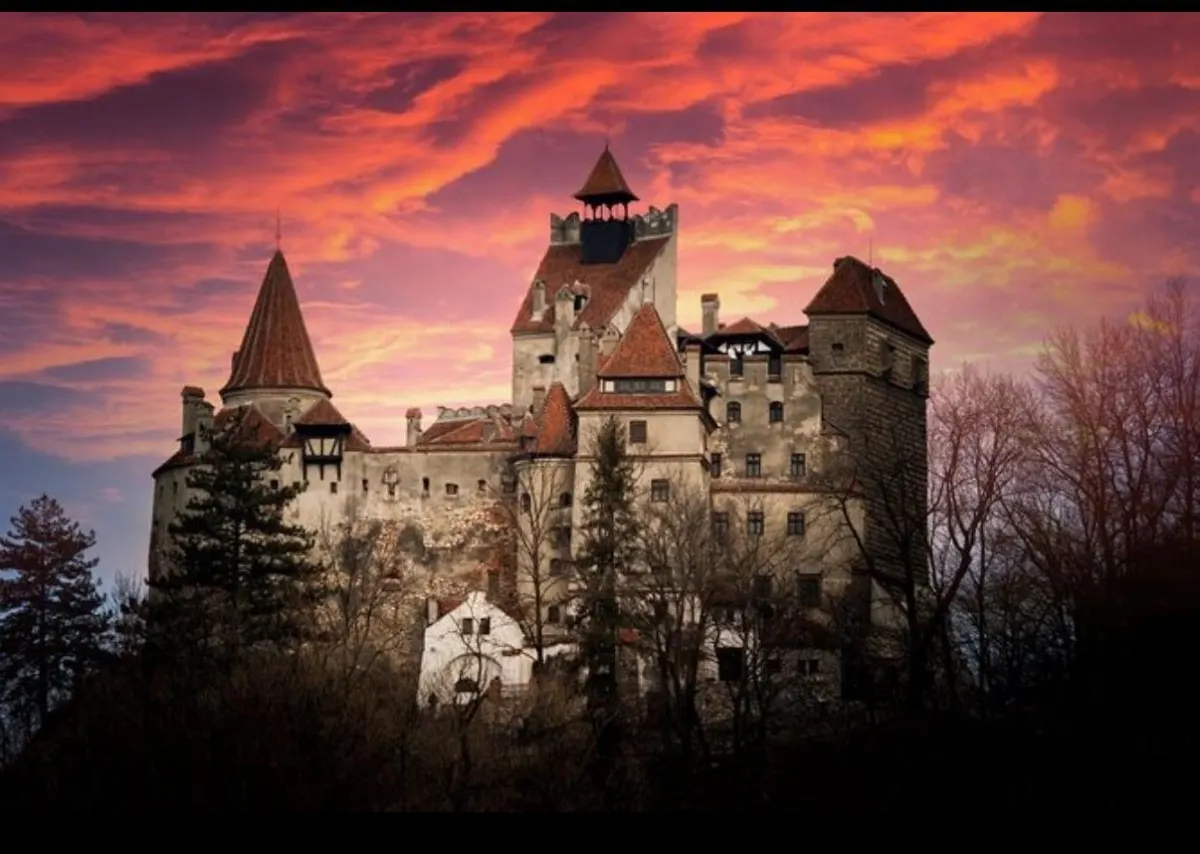
Bran is marketed as "Dracula's Castle", and with its towers on a rocky outcrop it certainly looks the part. Historically, though, its links to Vlad are tenuous at best. Its real story is just as interesting: it was a customs fortress on the route between Transylvania and Wallachia and later a beloved residence of Queen Marie of Romania.
Poenari Fortress
If you want Vlad's genuine stronghold, look to Poenari, high above the Argeș Valley. The ruined fortress is reached by a long climb of well over a thousand steps, and the view rewards every one of them.
Târgoviște and Bucharest
The Princely Court in Târgoviște, with its Chindia Tower, and the ruins of the Old Princely Court (Curtea Veche) in Bucharest's Old Town both bring you close to the world in which Vlad actually lived and ruled.
Sighișoara
Wander the cobbled lanes of this UNESCO-listed citadel, climb the Clock Tower and look for the house associated with his birth.
Why the legend still matters
Romanians have a complicated relationship with the vampire myth. Some find it frustrating that a fictional monster overshadows a real historical figure; others enjoy the tourism and good humour it brings. For visitors, the best approach is to enjoy both: the spooky fun of the legend and the gripping story of a medieval prince who lived on the frontier of empires.
Follow Vlad's footsteps with Kartas Bucharest Experience
Our Transylvania castles tour takes you from Bucharest to Peleș, Bran and Brașov in comfort, with time to explore at your own pace. For a deeper journey into Vlad's real world, including Târgoviște, Snagov, Poenari or Sighișoara, a private chauffeur can be arranged on request through our concierge. History, legend and a Mercedes waiting outside: the perfect combination.
خطّطوا معنا
هل تودّون أن نتولّى ترتيب ذلك لكم؟
أخبرونا بمواعيدكم — ونرسل لكم برنامجاً خاصاً بأسعار ثابتة.